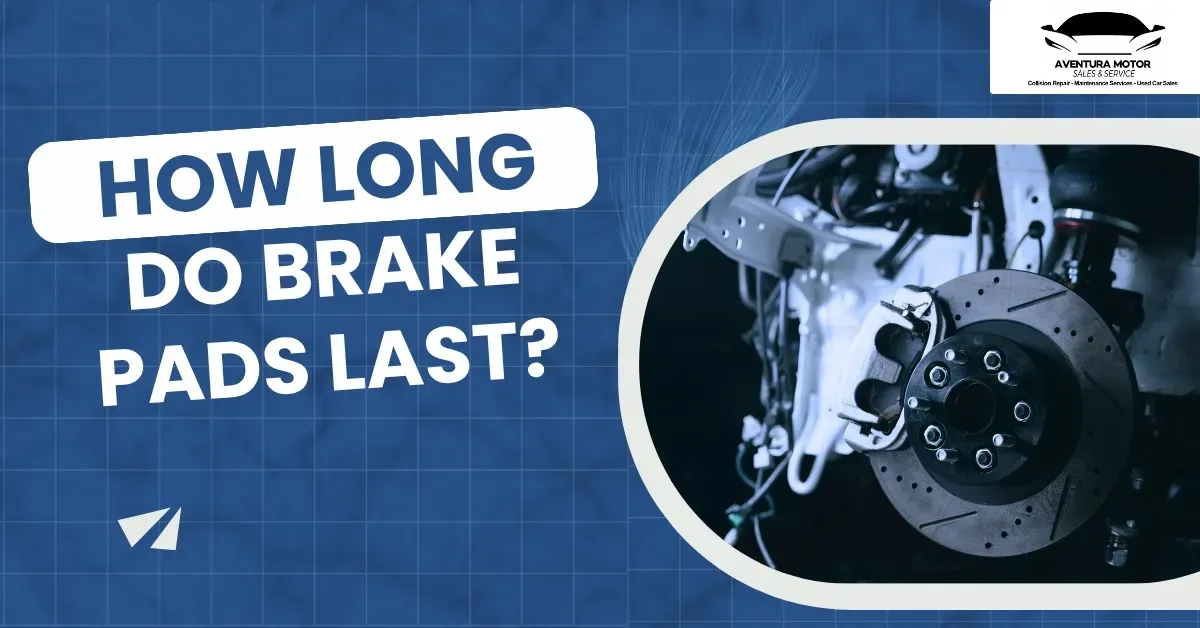
How Long Do Brake Pads Last?
March 30, 2026
New Paragraph
Discover More On:
Brake pads do not wear out on one fixed schedule. Some drivers may need replacement much sooner than expected, while others get far more miles out of the same type of pads.
The difference usually comes down to how the vehicle is driven, how much weight it carries, and how often the brakes are used in real traffic. Brake pads often fall somewhere in the 25,000-to-65,000-mile range, while many sets wear out around 30,000 miles depending on conditions.
That range matters in Aventura. Stop-and-go traffic on Biscayne Boulevard, short local trips, heavy summer heat, and frequent braking around shopping areas or I-95 ramps can all wear pads faster than steady highway driving.
At Aventura Motor Sales & Service, brake service is one of the key repairs we handle because worn pads often show up first as a small noise or a minor change in stopping feel before they become a bigger safety issue.
How Long Do Brake Pads Usually Last?
Your vehicle’s brake pads don’t last forever, and understanding how long they typically last can help you plan maintenance before problems arise.
Average mileage ranges for brake pad replacement
There is no one-size-fits-all answer, but most brake pads last tens of thousands of miles, not the life of the vehicle.
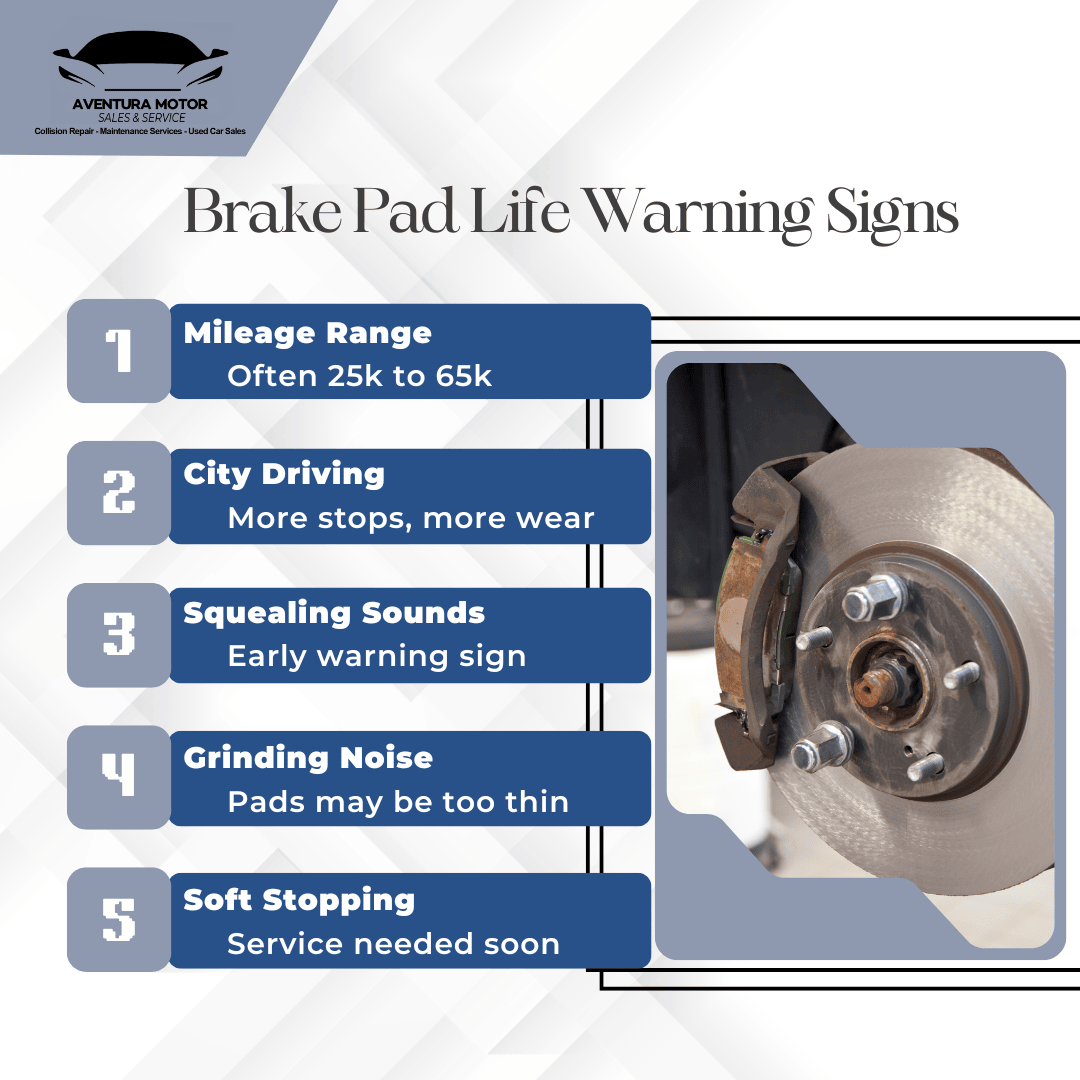
A general range of about 25,000 to 65,000 miles is common, and some drivers land near the middle while others fall well outside it based on use. Front pads also tend to wear faster because the front brakes usually do more of the stopping work.
That is why mileage alone should never be the only guide. Two vehicles with the same odometer reading can have very different brake wear depending on how and where they are driven.
Why driving habits can shorten or extend brake pad life
Driving style makes a huge difference. Hard braking, fast starts, downhill driving, short trips, and city traffic all generate more brake heat and wear. Smoother braking, more following distance, and less aggressive stop-and-go driving usually help pads last longer.
Signs You Need New Brake Pads
Brake pads are designed to wear down over time, but paying attention to how your brakes sound and feel can help you spot problems early. Before a complete brake failure occurs, your vehicle will usually give you warning signs that it’s time for an inspection or replacement.
Squealing, grinding, and other warning noises
One of the first signs of pad wear is noise. A high-pitched squeal can mean the wear indicator is contacting the rotor. Grinding is more serious because it may mean the pad material is already too thin and metal contact is starting. Grinding, squealing, pulling, and longer stopping time are among the warning signs that should not be ignored.
Those sounds matter because they often show up before a full brake failure. Catching the problem early can help protect other parts of the brake system from damage.
How reduced stopping power points to brake wear
If the vehicle takes longer to stop, the pedal feels softer than normal, or the car no longer feels confident during braking, the system needs attention. Reduced stopping power does not always mean only the pads are worn, but it does mean the brakes should be inspected soon.
What Causes Brake Pads to Wear Out Faster?
Brake pads don’t wear out at the same rate for every driver. How and where you drive plays a big role in how long they last, from your daily route to your braking habits and vehicle load.
Below are some of the most common factors that can cause brake pads to wear out faster.
Stop-and-go traffic, heavy braking, and vehicle weight
Frequent stops wear pads faster. So does carrying more weight. Florida city driving is simply harder on brakes than long, steady highway miles, and heavier vehicles or loaded vehicles ask more from the braking system every time they slow down.
That is one reason brake life varies so much from driver to driver. The route matters almost as much as the parts themselves.
How heat and driving conditions affect brake pad lifespan
Heat is part of normal braking, but too much heat speeds up wear. Riding the brakes, braking hard at high speed, or spending a lot of time in traffic all build friction and temperature. Over time, that shortens pad life and can also affect rotors.
Why Regular Brake Inspections Matter
Keeping up with regular brake inspections is one of the simplest ways to protect your stopping power and avoid costly repairs. A quick check can reveal problems long before you notice a change in how your brakes feel or sound.
How a brake inspection helps catch wear before it gets worse
A good inspection helps spot thin pads, uneven wear, rotor issues, fluid concerns, and hardware problems before they grow into a larger repair. Brake checks at least once a year or every 12,000 miles, and sooner if you hear or feel something unusual.
At Aventura Motor Sales & Service, brake inspections are part of the way we help drivers stay ahead of trouble instead of reacting after braking performance has already changed. The shop’s current service information also lists brake and clutch repair, inspections, and general maintenance among its core offerings.
When to schedule brake service near you for safer driving
You should schedule service when you hear squealing or grinding, feel vibration, notice a soft pedal, or see longer stopping distances. Even if the vehicle still stops, brake problems usually get more expensive when they are left alone.
Brake Pad Replacement vs Full Brake Service
When it’s time to address brake wear, the right repair depends on what the technician finds. Sometimes, a simple pad swap is all that’s needed; other times, a more complete brake service is the safer, longer-lasting choice.
Here’s how to tell the difference between basic pad replacement and a full
brake repair service.
When pads alone can be replaced
Sometimes, the pads are the only worn part that needs replacement. If the rotors are still in good condition and the rest of the brake hardware checks out, a pad replacement may be enough.
When rotors and other brake parts should be checked too
Pads are not the whole story. Rotors, calipers, brake fluid, hoses, and related hardware should also be checked. Firestone notes that letting pads wear too far can damage rotors, and worn pads can lead to more costly brake system repairs if ignored.
That is why a full brake inspection is often smarter than replacing pads based only on mileage or noise. It helps confirm what is actually worn and what is still serviceable.
How to Make Your Brake Pads Last Longer
Driving in busy South Florida traffic can be tough on your brakes. A few simple habits and routine checks can go a long way toward keeping your brake pads in good shape and helping them last longer between replacements.
Driving habits that reduce unnecessary brake wear
The best way to make brake pads last longer is to drive with more space and less urgency. Smooth stops, fewer hard-braking moments, and less time riding the brake pedal all help reduce heat and wear.
Removing unnecessary weight from the vehicle can help too. The more the car carries, the harder the brakes work every time you slow down.
Why routine brake service in Aventura, Florida helps extend brake life
Routine service helps because it catches wear at the right time. It also helps identify tire, alignment, or fluid issues that can affect how the vehicle brakes overall. In a place like Aventura, where local traffic can mean constant braking, staying on top of inspections is one of the easiest ways to protect both safety and brake life.
Schedule Brake Repair at Aventura Motor Sales & Service
If your vehicle is squealing, grinding, taking longer to stop, or simply overdue for a brake check, now is a good time to have it looked at.
Aventura Motor Sales & Service is located at
18920 W Dixie Hwy, Aventura, FL 33180, and the shop lists
(305) 203-6879 as its main contact number. The official site also shows current hours as Monday through Friday, 8 AM to 6 PM, and Saturday and Sunday, 9 AM to 4 PM.
Frequently Asked Questions
How long do brake pads usually last?
Most brake pads last somewhere between about 25,000 and 65,000 miles, but the number can vary a lot. Driving style, traffic, vehicle weight, and road conditions all affect how the pads wear down.
What are the clearest signs you need new brake pads?
Squealing, grinding, longer stopping distances, a soft pedal, and a car that pulls while braking are all important warning signs. If you notice any of those, it is smart to schedule a brake inspection soon rather than wait for the problem to get worse.
Can brake pads wear out faster in city traffic?
Yes. Stop-and-go traffic usually shortens brake pad life because the brakes are used more often and build more heat. That is one reason city drivers often replace pads sooner than drivers who mostly do steady highway miles.
Do I always need rotors replaced with brake pads?
Not always. Sometimes, pads can be replaced on their own, but the rotors and the rest of the brake system still need to be inspected to make sure they are in good condition.
How often should brakes be inspected?
A good rule is at least once a year or around every 12,000 miles, and sooner if you notice noise, vibration, or reduced stopping performance. Regular inspections with Aventura Motor Sales & Service help catch wear and can help you avoid more expensive repairs later.
Takeaways
Brake pad life is not one fixed number. It depends on the way you drive, the roads you use, the weight your vehicle carries, and how well the brakes are inspected and maintained over time. A general range of 25,000 to 65,000 miles is common, but real-world conditions can move that number up or down quite a bit.
The smartest move is to pay attention to the warning signs and not wait too long. If the brakes are getting noisy, the pedal feels different, or stopping is taking longer, a timely inspection can protect both your safety and your wallet.

Andrew Harris
Andrew Harris grew up in the bays of Automotive Excellence, the Seal Beach repair shop his father Joe opened back in 1981. When he officially stepped in as owner in 2005, Andrew carried on the family tradition with the same philosophy: deliver reliable auto care built on honesty and craftsmanship. What began as one small shop has grown into two Seal Beach locations, giving local drivers dealership-level service with a family-run feel.
Under Andrew’s leadership, Automotive Excellence has earned AAA Approval and built a team of ASE-Certified and Master technicians. From hybrid diagnostics to precision alignments, auto electrical repairs, and everything in between, his crew uses cutting-edge tools and training to tackle today’s most complex vehicles.
For Andrew, cars are only part of the story. He sees customers, vendors, and employees as neighbors first, and works to make every interaction built on trust and respect. Whether he’s sharing maintenance tips online or talking through a repair at the counter, his goal is to make car care clear, stress-free, and dependable for the Seal Beach community he proudly serves.
Discover More On:
